

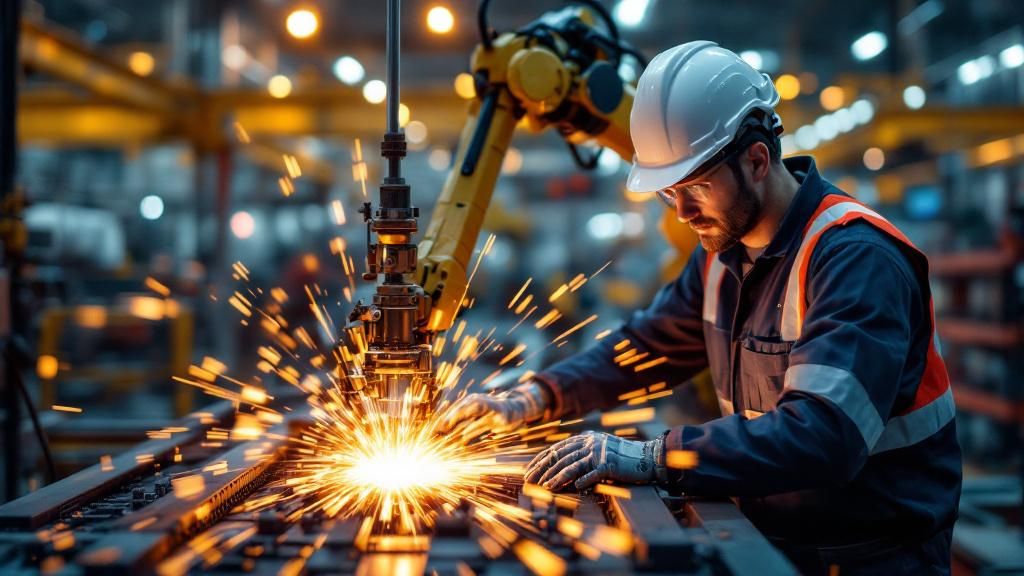
The UK manufacturing landscape is undergoing an unprecedented transformation as business leaders pledge record-breaking investments in advanced automation systems and comprehensive workforce development programmes. This deliberate repositioning underscores manufacturers’ commitment to enhance productivity, sustain international competitiveness, and secure their economic future. Our investigation reveals the substantial financial commitments propelling this sector overhaul, examines the innovative technologies reshaping factory floors, and investigates how companies are equipping their workforce for emerging challenges. Discover what this capital influx means for the UK manufacturing sector’s future.
Investment Surge in Automation Solutions
The UK manufacturing industry has experienced an extraordinary financial commitment towards automation solutions, with capital attaining record highs in recent years. Leading producers across automotive, aerospace, and electronics sectors are committing significant funds towards robotic equipment, machine learning, and sophisticated manufacturing approaches. This investment surge indicates sector confidence in automation’s capacity to enhance operational efficiency, lower manufacturing expenses, and raise quality benchmarks. The extent of this investment emphasises manufacturers’ recognition that technological progress is vital for maintaining competitive advantage in an increasingly global marketplace.
Industry analysts link this capital flow to multiple interconnected factors, such as post-pandemic logistics review, rising labour costs, and the pressing need for improved operational responsiveness. Companies are emphasising automation systems that deliver versatility and expandability, allowing swift adjustment to shifting market needs. Investment data reveal that manufacturers are doing far more than updating manual procedures but fundamentally reimagining operational frameworks. This deliberate strategy guarantees that British manufacturing remains at the leading edge of technological progress, placing the sector for long-term expansion and enhanced resilience against potential economic disruptions.
Strategic Human Capital Schemes
Recognising that technological advancement alone cannot drive success, UK manufacturers are investing substantially in broad-based skills development schemes. These initiatives constitute a core transformation in how the industry supports and develops human capital. By combining technological adoption with comprehensive training programmes, manufacturers are confirming their workforce can successfully run, service, and enhance new technologies. This comprehensive strategy resolves competency deficiencies whilst building employee confidence and engagement in an increasingly automated environment.
Competency Development Initiatives
Leading suppliers have established custom training centres and structured apprenticeships designed to equip workers with critical digital and technical skills. These programmes cover robotic systems operation, analytical data work, information security, and complex programming frameworks. Funding for tutor-delivered and web-based training systems ensures access to all staff categories. Companies are collaborating with educational partners to offer credentials acknowledged industry-wide, improving career progression opportunities and workforce retention figures considerably.
The monetary investment to workforce development goes further than first-stage induction, with manufacturers implementing ongoing capability enhancement schemes. Workers receive frequent development options to keep pace with changing technology environments and emerging industry standards. Many employers make available training subsidies, mentorship programmes, and sabbatical leave for continued learning. This sustained investment reflects companies’ dedication to creating long-term advancement opportunities and building a culture of lifelong learning throughout their organisations.
Working relationship with Educational Institutions
UK producers are establishing collaborative relationships with universities and further education colleges to synchronise course design with industry requirements. These collaborations ensure graduates possess practical skills directly relevant to contemporary production settings. Joint ventures include curriculum design, visiting lectures, lab facilities, and equipment provision. By engaging directly with academic organisations, manufacturers influence the pipeline of skilled workers joining the sector, addressing anticipated skills shortages proactively.
Additionally, manufacturers fund research programmes and technology hubs within academic institutions, fostering knowledge sharing and technological development. Combined-degree programmes and industrial placements offer students with valuable hands-on experience whilst offering companies first access to new talent. These collaborations strengthen the UK’s position as a global manufacturing hub, guaranteeing sustained competitiveness and positioning Britain as an desirable location for high-tech manufacturing investment and skilled workforce development.
Financial Consequences and Future Outlook
The historic investment in automation and skills training is projected to create significant financial gains across the UK manufacturing sector. Market experts anticipate output increases of up to 25% in the coming three years, resulting in higher production and enhanced competitiveness in worldwide markets. These improvements are expected to create approximately 15,000 new skilled manufacturing positions whilst strengthening Britain’s standing as a technology-led manufacturing centre. The cascading impact of this funding will potentially drive expansion throughout distribution networks and supporting sectors.
Long-term prospects for UK manufacturing appear increasingly optimistic as businesses establish themselves at the leading edge of Industry 4.0 adoption. Companies investing in automation today are preparing themselves to capture emerging market opportunities and react quickly to shifting market requirements. The combination of artificial intelligence, robotics, and advanced analytics promises to release creative capacity previously constrained by labour availability and operational limitations. Forward-thinking manufacturers recognise that enduring market position depends upon ongoing technological development and workforce capability development.
Looking forward, the momentum generated by present investment movements indicates a significant restructuring of British manufacturing’s economic role. Public funding through skills funding and enterprise incentives will likely accelerate adoption rates across smaller businesses. As automated systems advance and worker capabilities increase, UK manufacturers are well-positioned to regain market share from overseas competitors. This transformation embodies not merely industrial modernization but a strategic repositioning of manufacturing as a cornerstone of the UK’s future economic prosperity and technological advancement.
